
What's The Difference Between Jean Style and Jean Fit?
By Kaylee C.

When shopping for jeans, the terms style and fit are often used interchangeably—but they refer to two distinct aspects of denim. Understanding the difference between jean style and jean fit can make shopping for denim much easier, especially when trying to find a pair that looks good, feels comfortable, and fits your personal style.
In simple terms, jean fit describes how the jeans are cut and how they sit on the body, while jean style refers to the design, details, and overall visual appearance. While they work together in every pair of jeans, they serve different purposes.
Recognizing that difference can make it much easier to evaluate product descriptions and find denim that aligns with both your preferences and your needs.
What is jean fit?
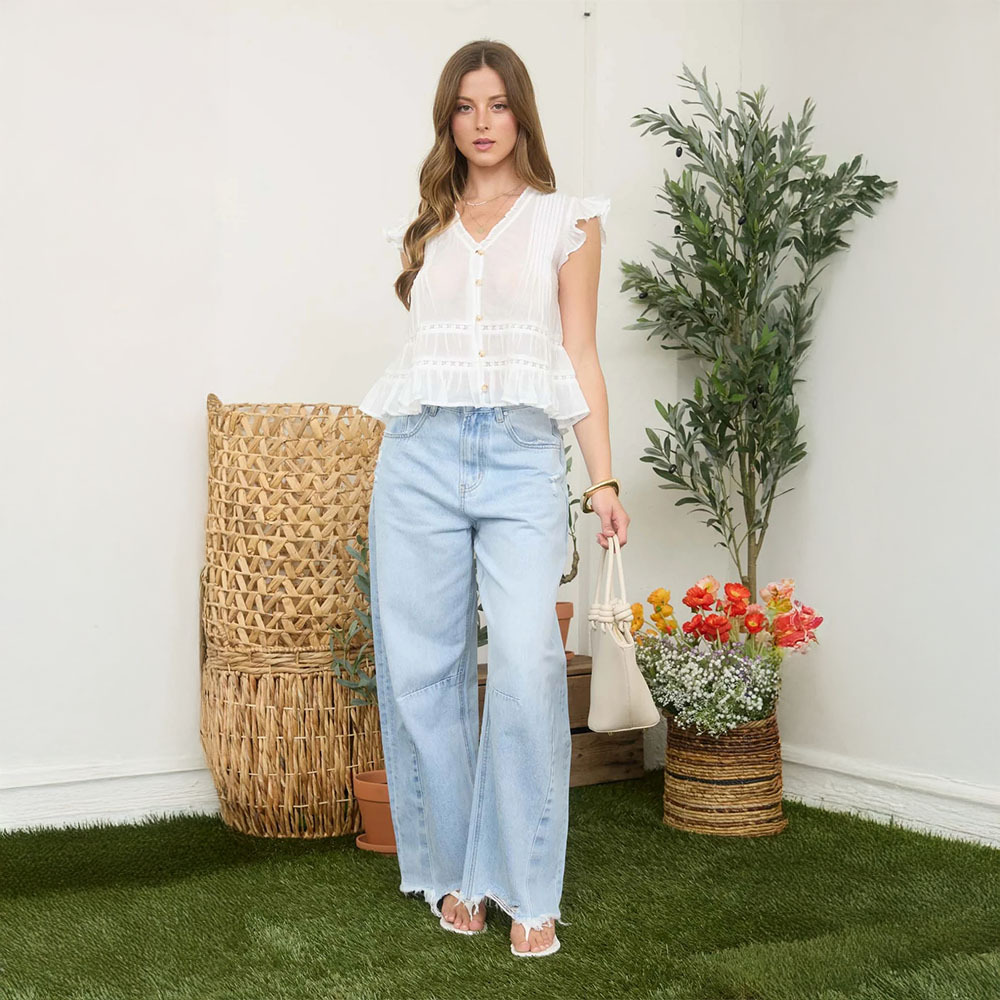
Jean fit refers to the cut and proportions of the jeans and how they follow the body from the waist down to the leg opening.
It influences how the jeans sit at the waist, how they feel through the hips and thighs, and how the leg is shaped from the knee down.
Because of this, fit plays the most important role in comfort, mobility, and overall wearability.
There are several standard categories of jean fits.
Skinny fit jeans: Designed to follow the shape of the leg closely from thigh to ankle, often incorporating stretch for ease of movement.
Slim fit jeans: Offers a similar silhouette with slightly more room.
Straight-leg jeans: Maintain a consistent width from hip to ankle, creating a clean, balanced line.
Relaxed and loose fit jeans: Provide additional room through the hips and thighs for a more relaxed feel.
Tapered fit jeans: Offer more space at the top while narrowing toward the ankle.
Bootcut fit jeans: Feature a subtle flare at the hem.
Each fit offers a different experience when worn, which is why two pairs of jeans can look similar but feel entirely different.
What is jean style?
 While fit defines structure, jean style defines appearance. Style encompasses the design elements that shape how a pair of jeans looks and how they fit into an outfit.
This includes the rise (high-rise, mid-rise, low-rise), the wash (light, dark, faded, or acid-washed), and surface details such as distressing, raw hems, or fading.
It also includes design variations like cropped lengths, flared legs, vintage-inspired finishes, or utility details such as carpenter styling.
Style is often what draws attention first—it communicates whether a pair of jeans feels classic, modern, trend-driven, or understated. However, without the right fit, even the most visually appealing style may not perform well in terms of comfort or wear.
Jean style vs jean fit: what’s the difference?
The distinction becomes clearer when viewed side by side:
Jean Fit: | Jean Style: |
|
|
|
|
|
|
|
|
Examples: skinny, slim, straight, relaxed | Examples: high-rise, cropped, distressed |
A useful way to think about it is: fit determines function, while style determines expression.
How do jean fit and style work together?
Although they are different, fit and style are always interconnected. Every pair of jeans combines both elements.
A single fit can appear in a range of styles. For example, a straight-leg fit may be designed as a mid-rise, distressed jean, or as a high-rise style with a clean, dark wash.
On the other hand, a single style, such as a cropped hem, can be applied across multiple fits, including skinny, straight, or relaxed silhouettes.
This overlap is what often causes confusion, particularly when shopping online. Two pairs of jeans may share similar styling details but offer very different fits when worn.
How to choose the right jean fit and style.
 Choosing the right pair often comes down to balancing comfort, appearance, and how you plan to wear them day to day.
Fit should generally be considered first, as it determines how the jeans will feel throughout the day. A well-chosen fit supports comfort and ease of movement, whether that means a structured slim fit or a more relaxed silhouette.
Style can then be used to refine the look. Consider how the jeans will be worn—clean, dark washes and minimal detailing tend to be more polished, while lighter washes, distressing, or cropped lengths offer a more casual or trend-forward feel.
Balancing the two allows for greater versatility. A consistent fit paired with varying styles, or a preferred style offered in different fits, can both be effective approaches depending on personal preference.
For additional styling inspiration, explore our recent reel on Instagram or watch the denim styling ideas reel on Facebook.
Final thoughts
The difference between jean style and jean fit ultimately comes down to structure versus design. Fit shapes how the jeans function on the body, while style defines how they are perceived visually.
Understanding both allows for more informed decisions—and a more consistent outcome—when selecting denim.